
From Policy to Practice: Launching the Get on the Bus “The Ride Guide”
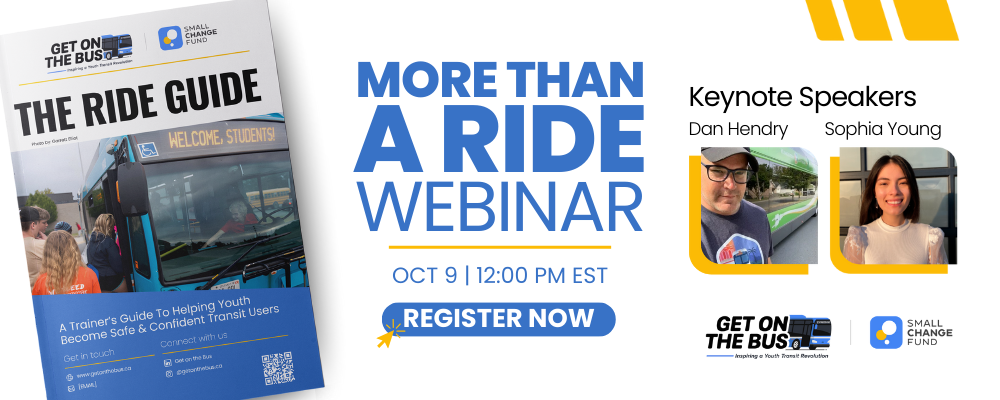
On October 9, 2025, the Get on the Bus movement officially launched “The Ride Guide” through a national webinar with communities, transit professionals, educators, and youth advocates from across Canada.
The webinar marked an important milestone for the movement: a deliberate shift from why fare-free youth transit matters to how communities can successfully train, support, and engage young riders once policy is in place.
Why the Ride Guide Was Created
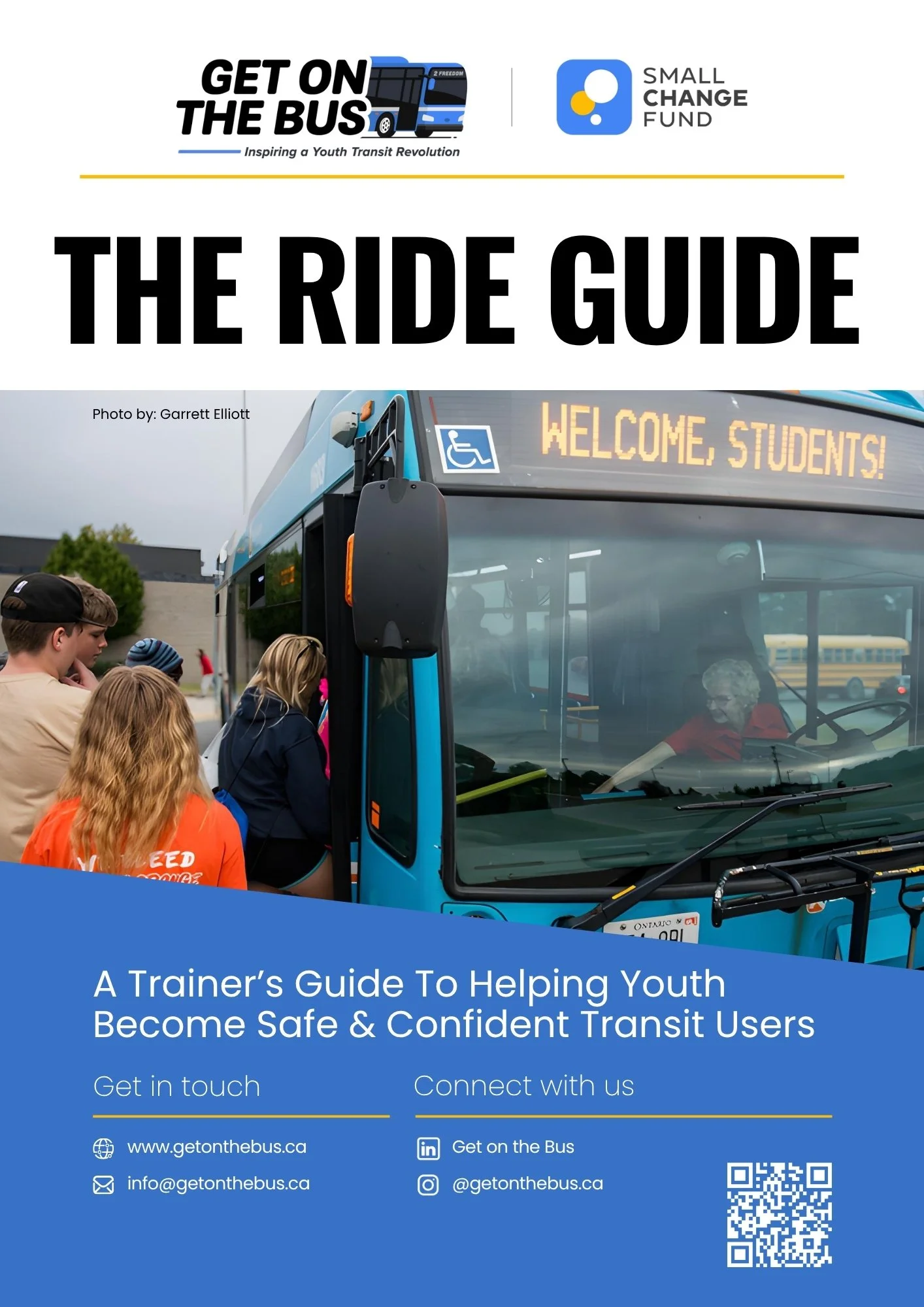
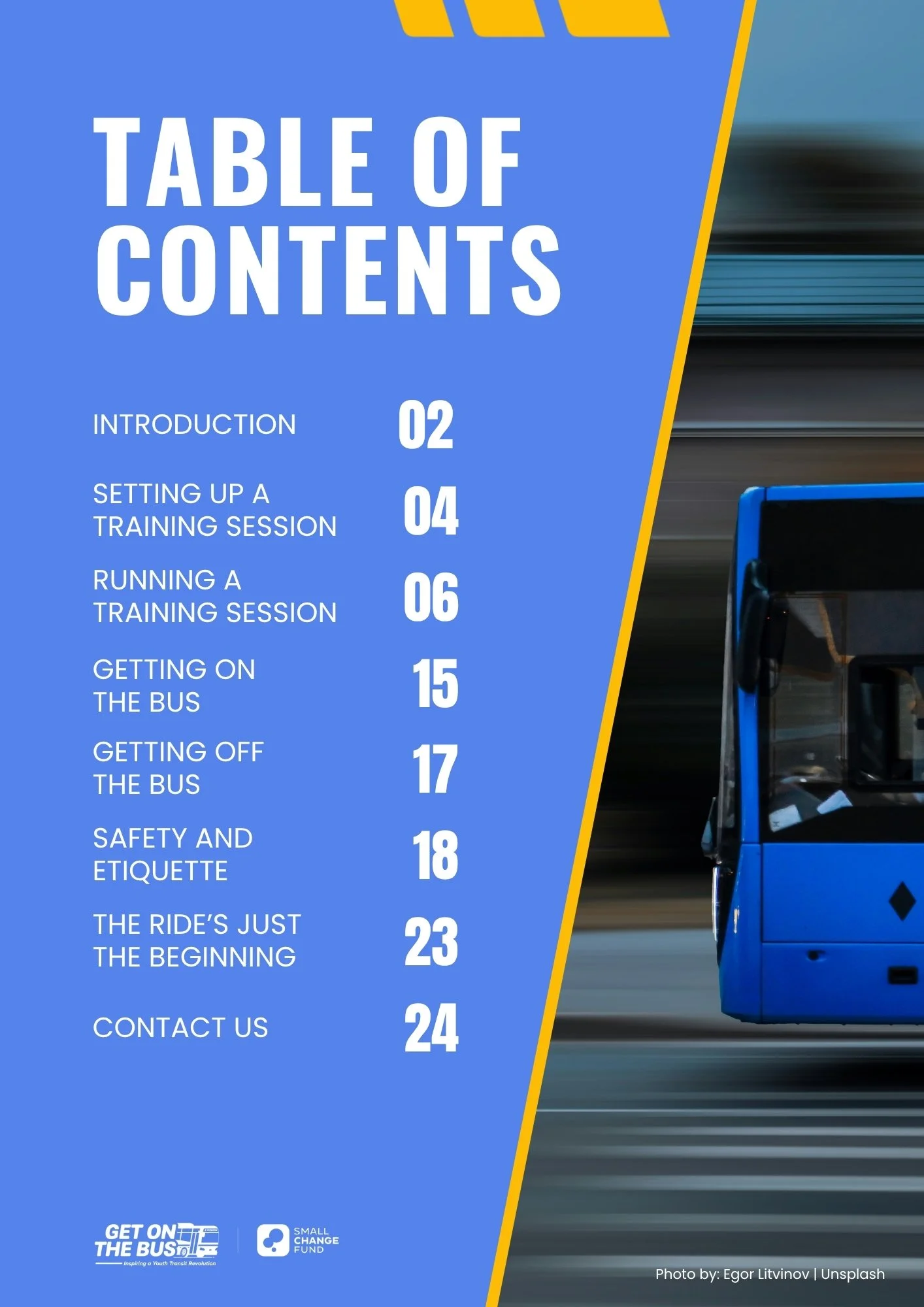
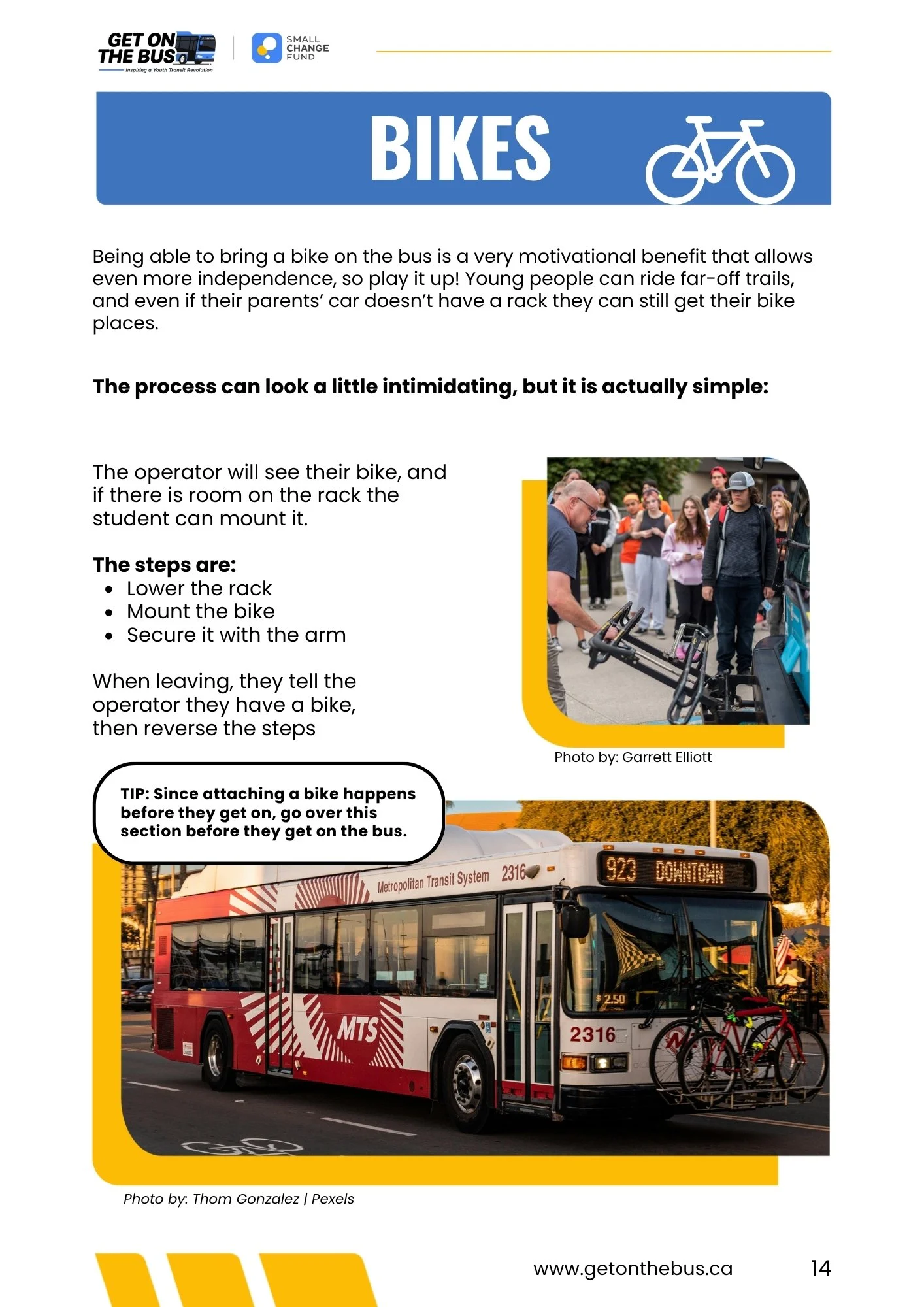
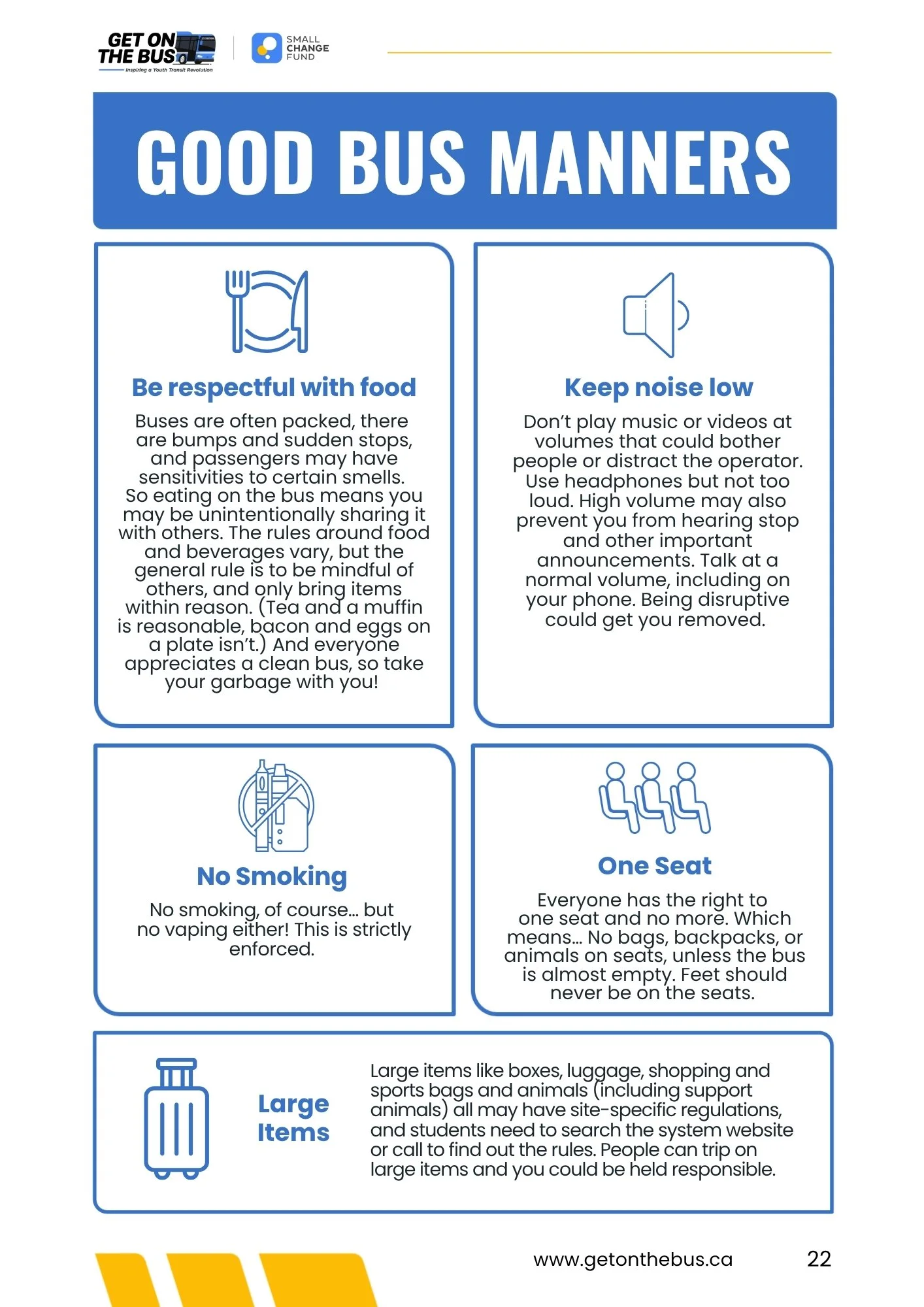
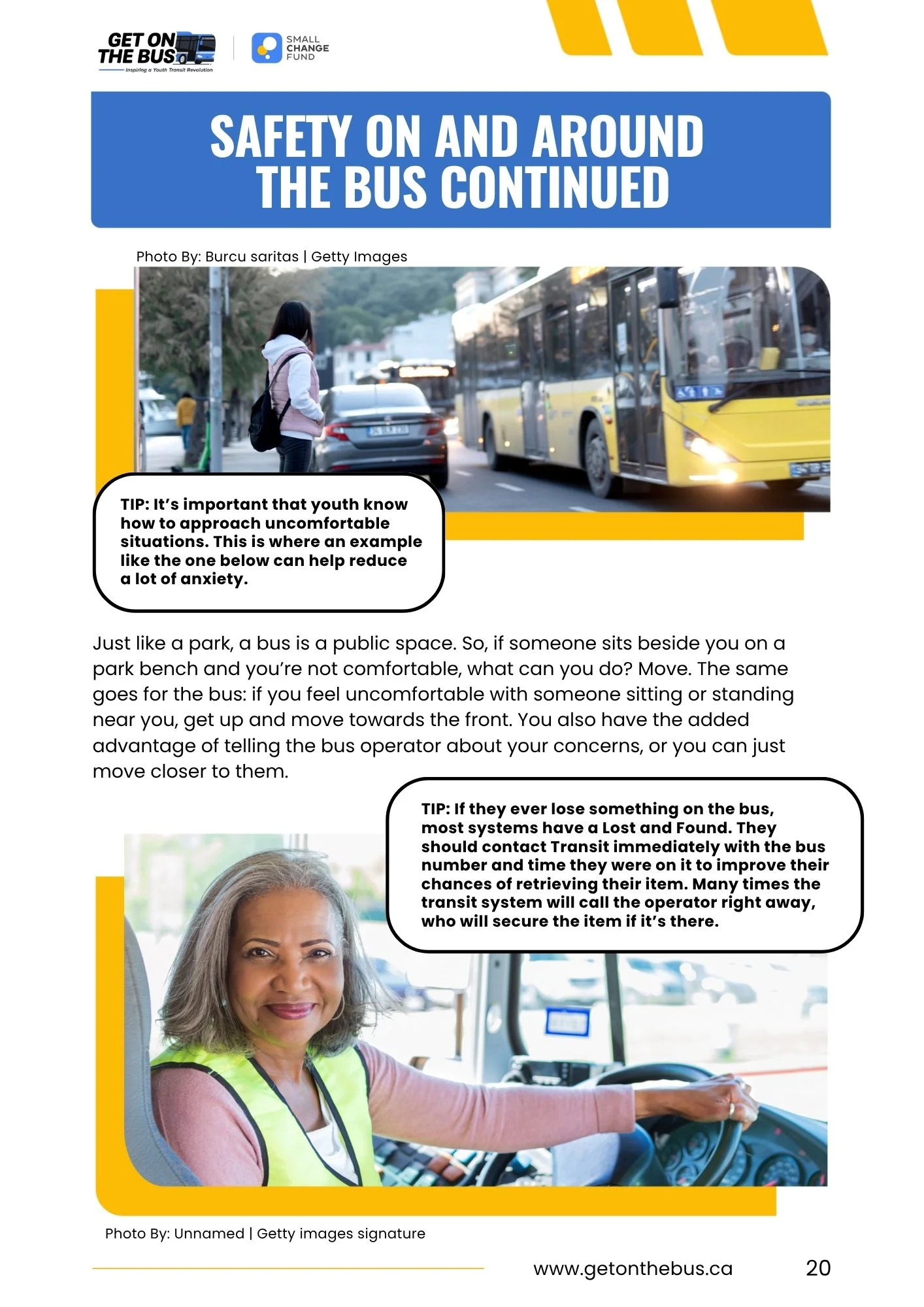
Over the past decade, dozens of communities have made progress on the policy side of youth transit, introducing free or discounted passes, pilot programs, and targeted access initiatives. What we consistently heard, however, was a gap that followed policy success:
“We’ve changed the fare structure, but now what?”
The Ride Guide was created to answer that question.
Rather than offering a one-size-fits-all script, the guide helps communities:
Design youth-centred transit training
Build local best practices that reflect their system and riders
Move beyond transactional access toward confidence, culture, and belonging on transit

Key Takeaways from the Webinar
During the October 9 launch, several themes emerged clearly from both presenters and participants:
1. Training is not an add-on; it’s infrastructure
Communities emphasized that youth training should be viewed as essential as signage, schedules, or fare systems. Training reduces anxiety, improves rider behaviour, and builds long-term ridership habits.
2. Peer-to-peer learning works
Participants strongly resonated with the idea that youth learn best from other youth. This insight directly informs how the Ride Guide feeds into the upcoming Student Ambassador Program, where trained students support and mentor their peers.
3. Aggregation saves time and builds confidence
Communities have noted the value of having an open, centralized resource that brings together examples, principles, and lessons learned from across Canada—especially for staff and volunteers who are new to youth engagement.
4. Policy success creates a responsibility to engage
Communities that have already “won” on fare policy shared that the Ride Guide helped them think about what comes next: normalization, safety, communication, and youth voice.
How Communities Are Already Using the Ride Guide
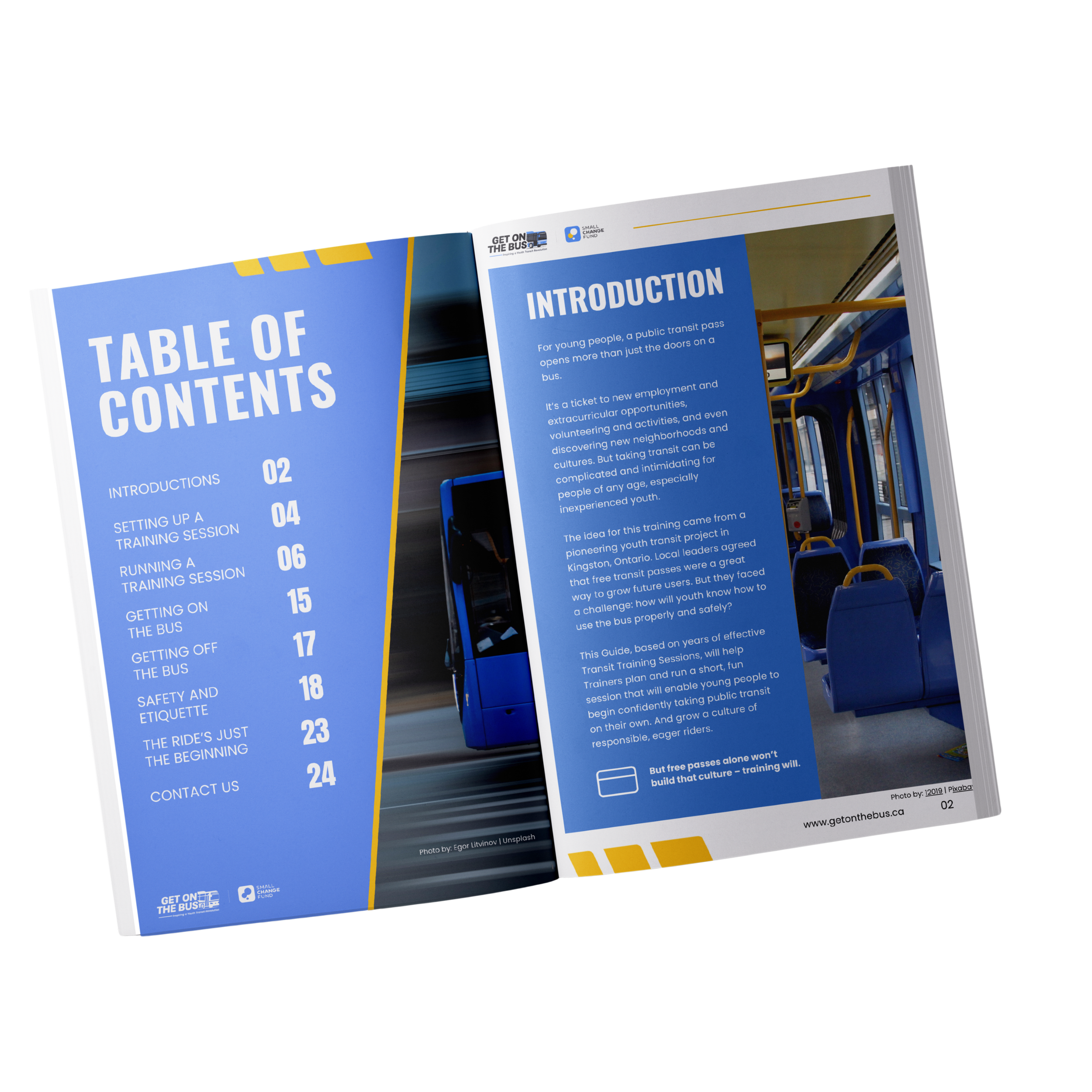
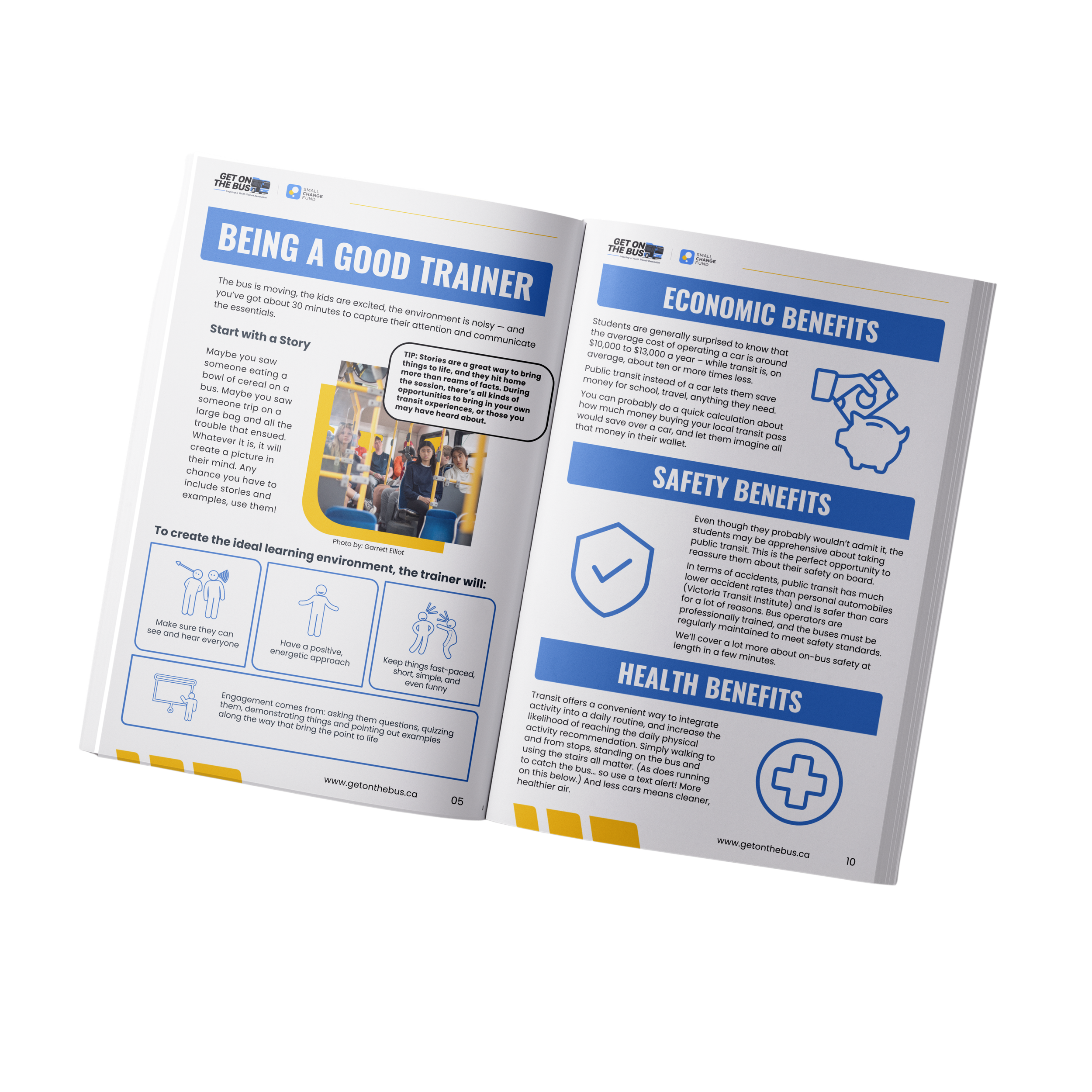
Since the launch, the Ride Guide has been shared with:
Communities transitioning from fare-free pilots into permanent programs
Transit agencies exploring school-based or after-school training
Municipal staff looking to strengthen youth engagement without starting from scratch
Support local workshops and classroom sessions
Align transit training with broader goals like climate action, equity, and mental well-being
What Comes Next
The Ride Guide is not a static document. As more communities put it into practice, their insights will continue to shape future iterations, case studies, and tools.
Most importantly, the guide helps reinforce a core belief of the Get on the Bus movement:
Access is only the first step. Belonging, confidence, and culture are what make transit stick.
We’re excited to see how communities continue to build on this foundation, and to support the next generation of transit riders, advocates, and leaders along the way.