
Youth Are Already Building the Cities We Talk About
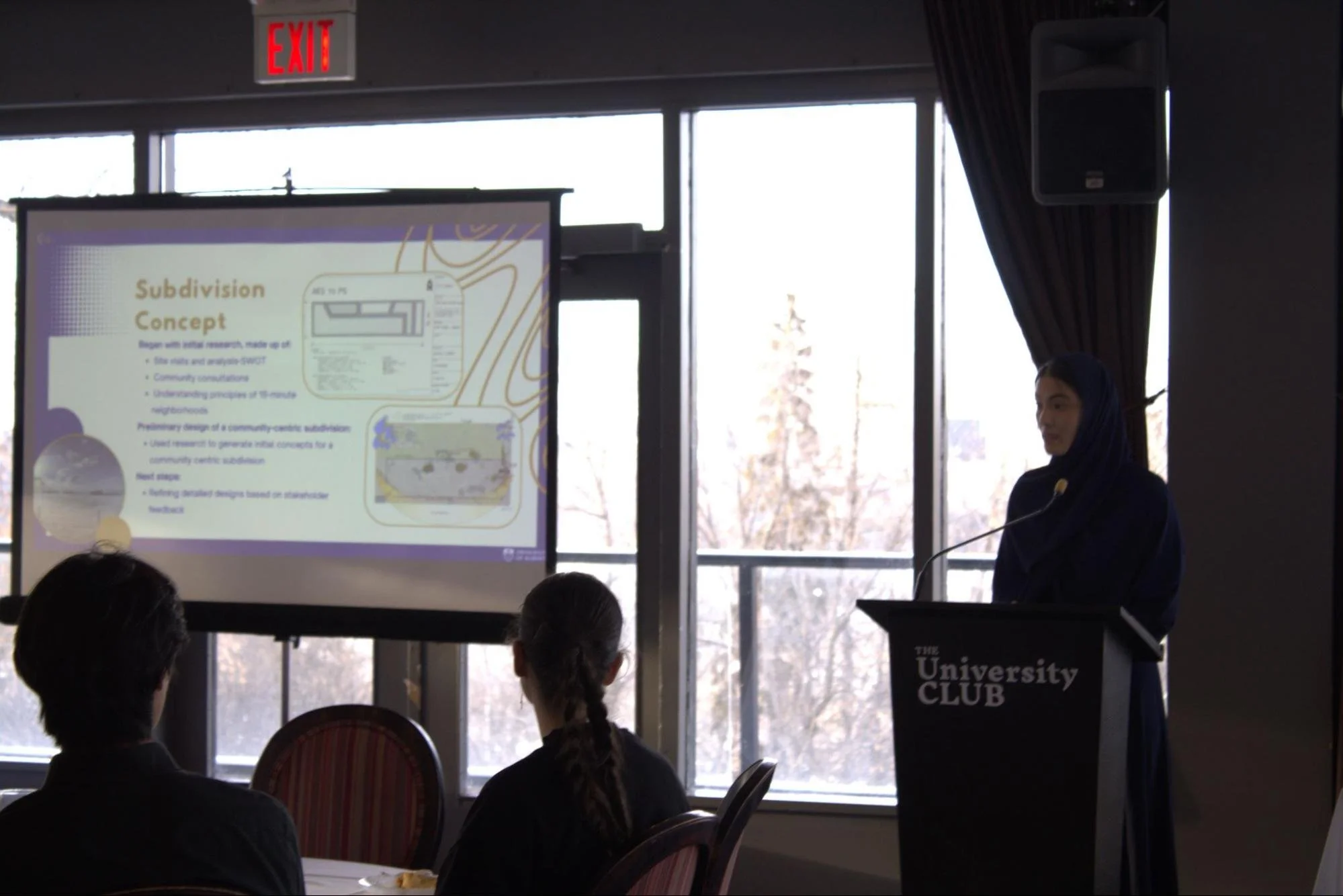
On March 12, I had the honour of serving as the keynote speaker at Connect 2026: Sustainable Innovation, an interdisciplinary student-led exposition conference by Civil Connect and Get on the Bus. It was an energizing evening that brought together students, researchers, industry leaders, and community partners to highlight youth projects aligned with the United Nations’ Sustainable Development Goals (SDGs) through curated booths, presentations, and meaningful conversations.
I left the event genuinely gobsmacked by the quality of work that young people are already producing. From tackling urban sprawl via transit-friendly design to reimagining libraries as community-centered spaces, the ideas were not only creative but grounded in real-world impact. Over 50 student projects were represented and 10 industry members from architecture, construction, machine learning, education, government and academia attended. Of the presenters, 20 were additionally supported to cross-present their work at the Festival of Undergraduate Research and Creative Activities. There they went on to win the Canada Research Impact Award for Knowledge Sharing and the Sustainability in Research Award.
This is not just about a single event. It is about building a generation that sees transit as foundational to good design. Through Get on the Bus’ sponsorship, Civil Connect was able to properly resource their team and deliver an event that truly brought people together. Youth involved in the club engaged more deeply with transit advocacy, learning how mobility connects to design, access, and equity, and then put that learning into design. When young people begin thinking this way early, it changes how communities are planned, how systems are built, and who those systems are built for.
This event shows that youth can play a meaningful role in the design process, shaping ideas and advancing them in tangible ways. More than that, it demonstrates how these experiences carry into the future. Students are not only contributing in the present, but also becoming engineers, planners, business leaders, and policymakers who will carry these values into their careers.
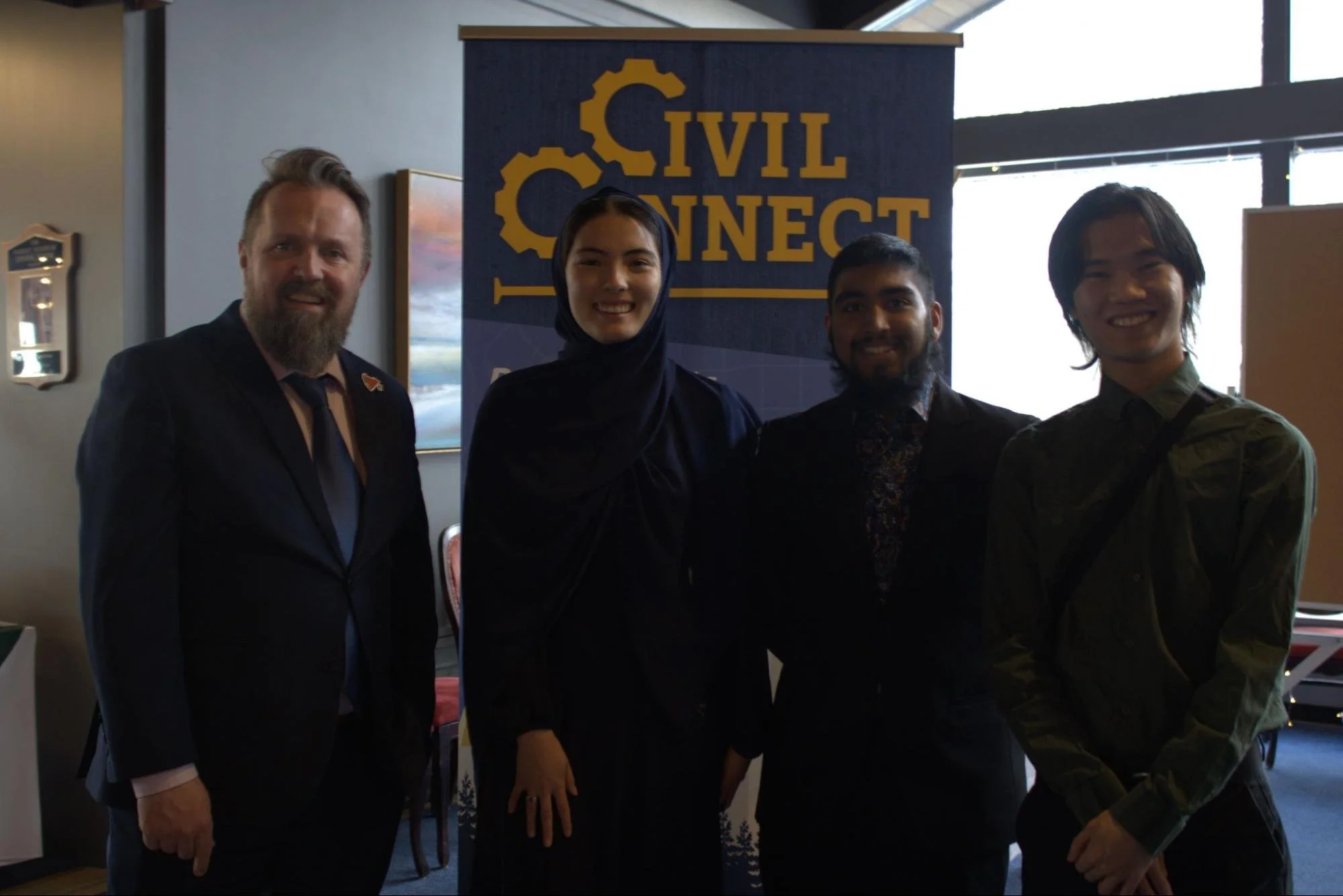
The keynote also gave me the opportunity to share more about the work we are doing at Get on the Bus. I had the chance to connect with Edmonton’s Councillor Jon Morgan, as well as the co-founder of the student-housing app Elev, Jean Bruce Koua. These conversations have already led to a productive meeting with Edmonton Mayor Andrew Knack. More importantly, they opened the door to conversations about how youth perspectives on transit and design can be integrated into broader city-building discussions.
At the same time, many of the students I spoke with walked away with a stronger understanding of the role transit plays in shaping communities. There was a clear shift toward thinking about mobility not as an afterthought, but as a foundation for inclusive design.
This experience reinforced something I have come to believe deeply. Student-led spaces are powerful when they are supported. When young people are given the resources and trust to lead, they produce work that is innovative and actionable. Bringing students, industry, and government into the same room creates pathways for ideas to move forward, and there is a clear appetite from partners to collaborate on youth-driven transit and city-building initiatives.
At Get on the Bus, this is exactly the kind of ecosystem we are working to build. One where youth ideas are taken seriously, where partnerships are meaningful, and where mobility is recognized as a key part of equitable and sustainable communities.
Thank you again to Civil Connect, everyone who attended, and all the young people who showed what is possible. The work is already happening, and our role is to support it, scale it, and keep pushing it forward.
– Sophia Young