
When I was 15 years old I delivered my first delegation at Regina City Council.
My heart was pounding. My hands shook like leaves as I recited a slam poem about why our city needed stronger climate action, including better public transit access.
When I finished, the room was so silent you could hear a pin drop. I had never felt such stillness before. People had heard what I had to say.
That moment did not immediately change a policy or transform the transit system, but it created an opening. It led to conversations, relationships, and opportunities that allowed the message to travel further than I ever could have carried it alone.
Over time, those conversations contributed to fare-free transit for all children under 13 in Regina. Today, that work continues through the extension of the fare-free transit pilot at Johnson Collegiate, which gives approximately 700 students access to public transportation.
In July, I experienced that same stillness again.
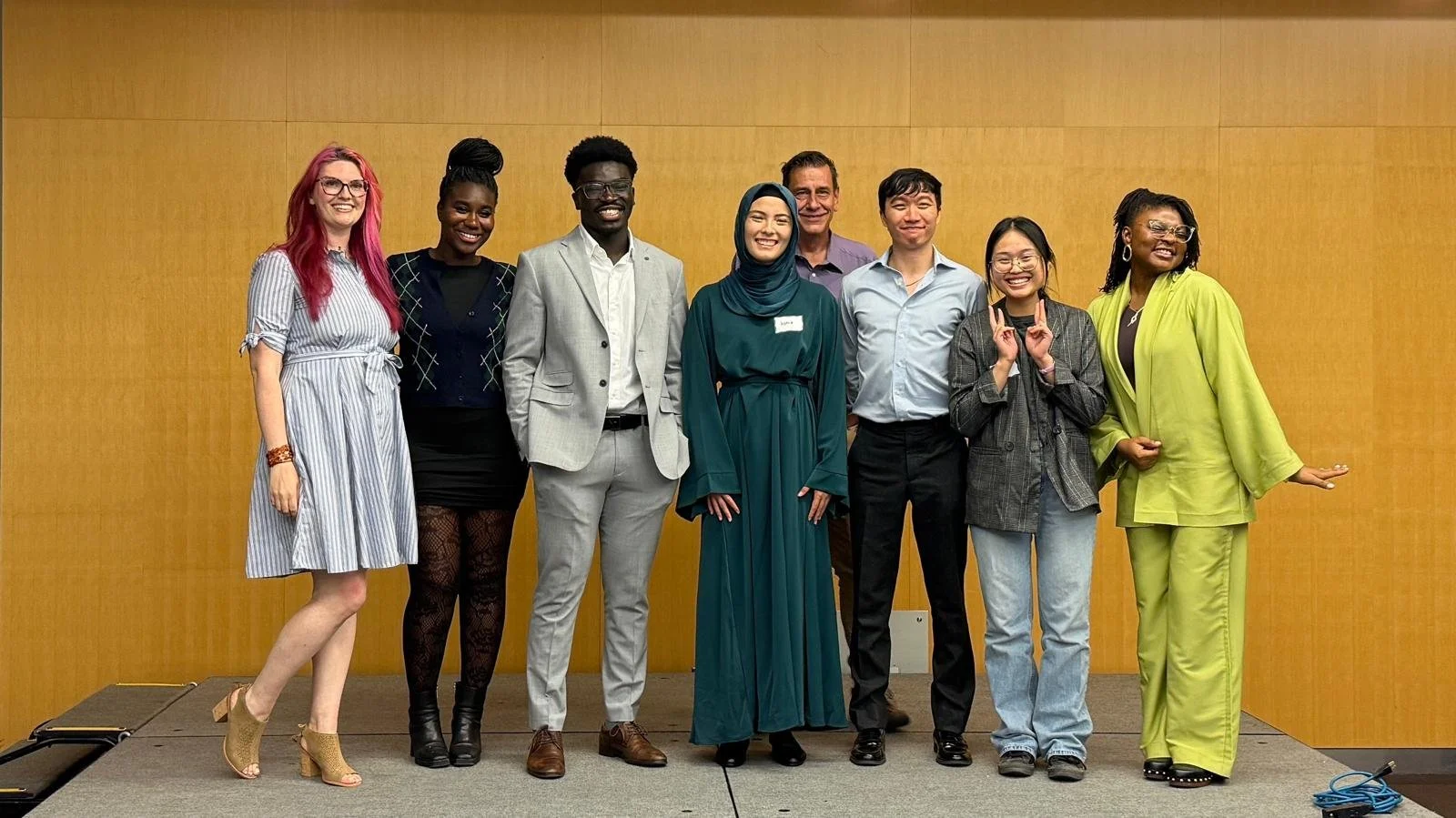
I had been invited to participate in On Site Placement’s Changemakers End-of-Program Celebration in Edmonton. The event brought together newcomer, refugee, and youth leaders from across the city to recognize the meaningful changes they are creating in their communities.
I was fortunate to participate in the panel discussion, “How Ordinary People Become Changemakers,” alongside Ren An Lim, Khanh Ha, and moderator Lola Daudu.
During the panel, I spoke about the broader meaning and purpose of public transit in our communities. I also spoke about our new program, Next Stop: Change, which gives youth a platform to share what they have learned while offering practical encouragement and skills to those who may be taking their first steps into advocacy.
In fact, first steps were a major theme in our panel discussion. Creating change often begins by recognizing your natural spark: the issue, experience, or idea that makes you feel that something could be better. It grows when you find mentors to recognize that spark, take you seriously, and help you see possibilities that you might not yet see for yourself. But it all starts by having the courage to take the first step.
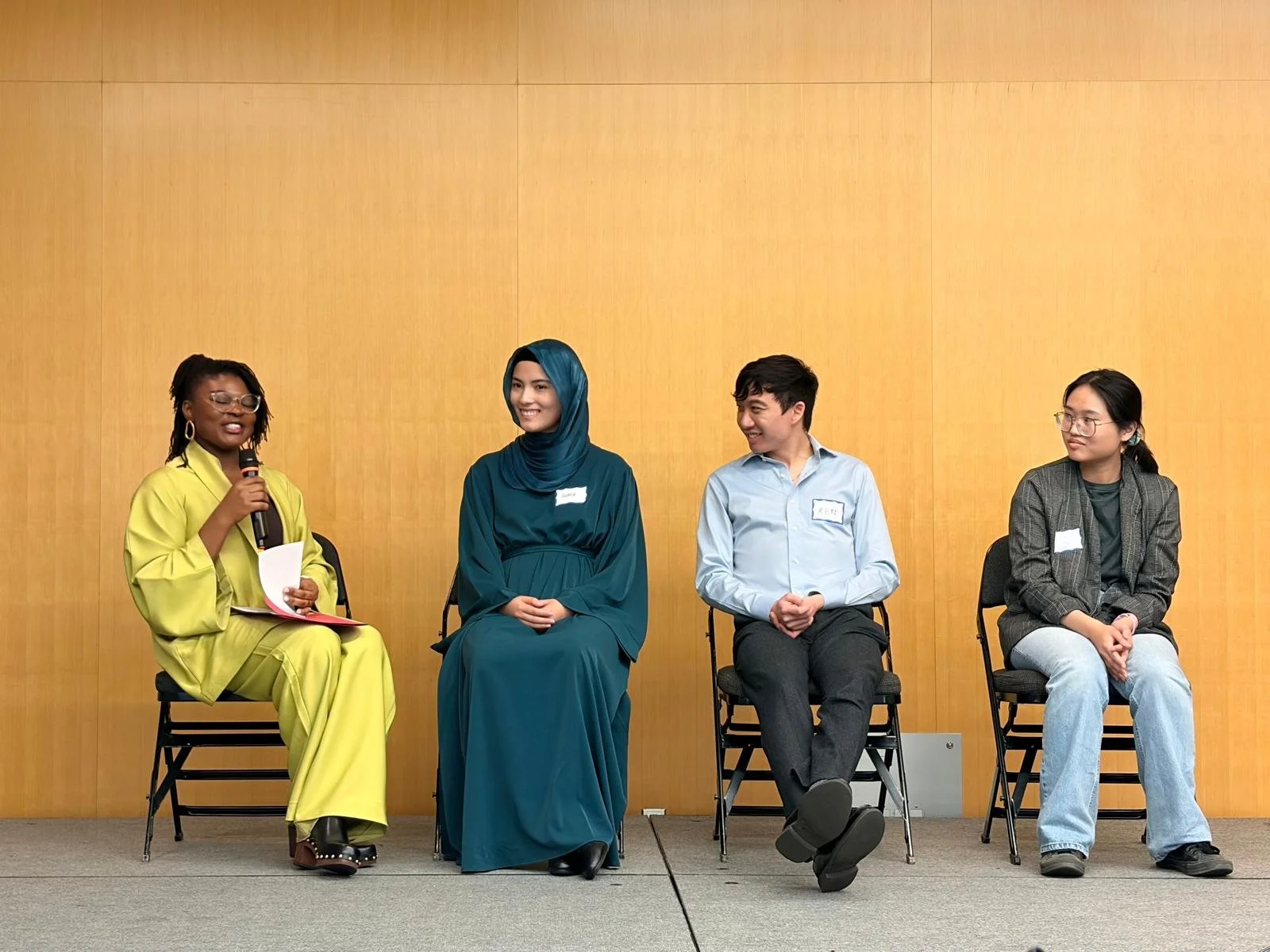
From left to right, Lola Daudu, Sophia Young, Ren An Lim, and Khanh Ha.
Much like when I first spoke up at age 15, the room became noticeably quieter during our panel. People stopped eating. They put away their phones. And when they did take out their phones, it was to record the discussion.
For a moment, I felt like that 15-year-old standing in front of City Council again.
The room was listening, and the conversation continued after the panel. Two young leaders expressed interest in potentially becoming mentors for Next Stop: Change. I also had a meaningful conversation with an Elder who informally invited me to participate at an Every Child Matters event in September since mobility affects Indigenous young people’s ability to access education, community services, cultural spaces, employment, and relationships.
These potential partnerships are exciting, but this story goes beyond what happened and into what it means. It means that regardless of whether you are 15, 21, or much older or younger, people are willing to hear what you have to say.
They want to listen. They want to understand. And often, they want to become part of the work.
This is the work we are advancing through Get on the Bus. We are creating programs like Next Stop: Change that recognize young people as thought leaders, storytellers, and mentors. We are helping younger advocates build confidence by providing inspiration, practical training, and examples from people who have already taken their first steps. At the same time, we are demonstrating that youth transit benefits entire communities.
At 15, I could not have known where my first speech would lead. I only knew that I had something I believed was worth saying. Years later, sitting in front of another silent room, I was reminded that meaningful change often begins in exactly that way: one person takes a first step to tell their story, giving others a reason to step forward too.
Ultimately, that is why this work matters. Together, we are making our communities safer, more equitable, more connected, and more accessible: one voice, one journey, and one first step at a time. Thanks again to On Site Placement, my fellow presenters, and all the changemakers highlighted by this event.