
Why Youth Transit Belongs On Your Municipal Election Agenda
Across Canada, municipalities invest millions of dollars annually to support youth, from recreation, libraries, sports, and education to employment programs, mental health initiatives, community services, and so much more. These investments create incredible opportunities, but too often one simple barrier remains: getting there. Sign up for our newsletter to stay updated on youth transit wins across Canada.
Youth transit is about more than bus rides. It is about providing young people with the ability to reach services and opportunities safely and independently. It is also about helping families, strengthening communities, supporting local businesses, and building the next generation of public transit riders.
As communities across Canada continue to explore youth transit, one thing is becoming increasingly clear: investing in youth mobility is one of the smartest long-term investments municipalities can make.
We’ve shared some key benefits and a variety of approaches in this blog to help those running for municipal office envision what a dedicated youth transit program could look like in their community. If you’d like to explore further, we'd be happy to connect as well as share additional research, lessons, and examples from municipalities across Canada.

There Is No One-Size-Fits-All Solution
Every municipality has unique geography, demographics, transit capacity, financial realities, and community priorities. The strongest programs are the ones designed around local needs while learning from the experiences of communities that have already started the journey.
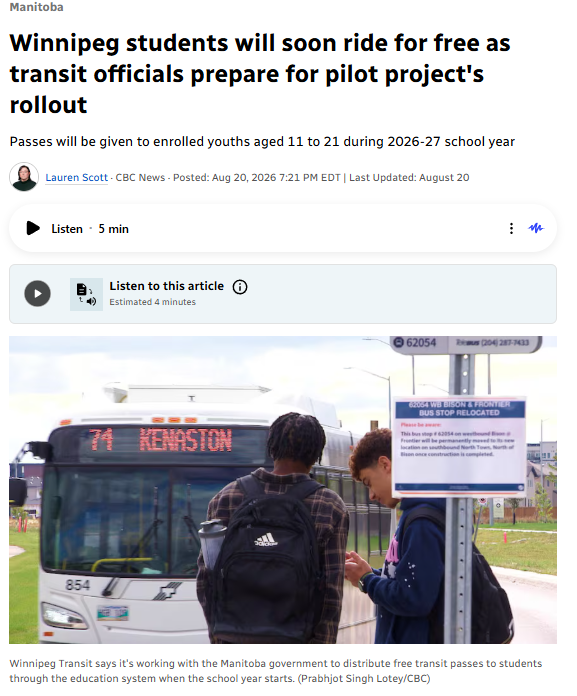
Some municipalities begin with free after-school or weekend access. Others introduce seasonal pilots. Some focus on transit training and education. Others build youth ambassador programs, improve engagement with young people, or gradually expand eligibility as funding and experience grow.
Communities Across Canada Are Already Showing What Is Possible
Burlington, Ontario began with free evening and weekend transit access for youth. After seeing positive results, the City expanded the program to include a limited number of rides during the school day. This is an excellent example of how communities can build programs gradually while learning from experience.
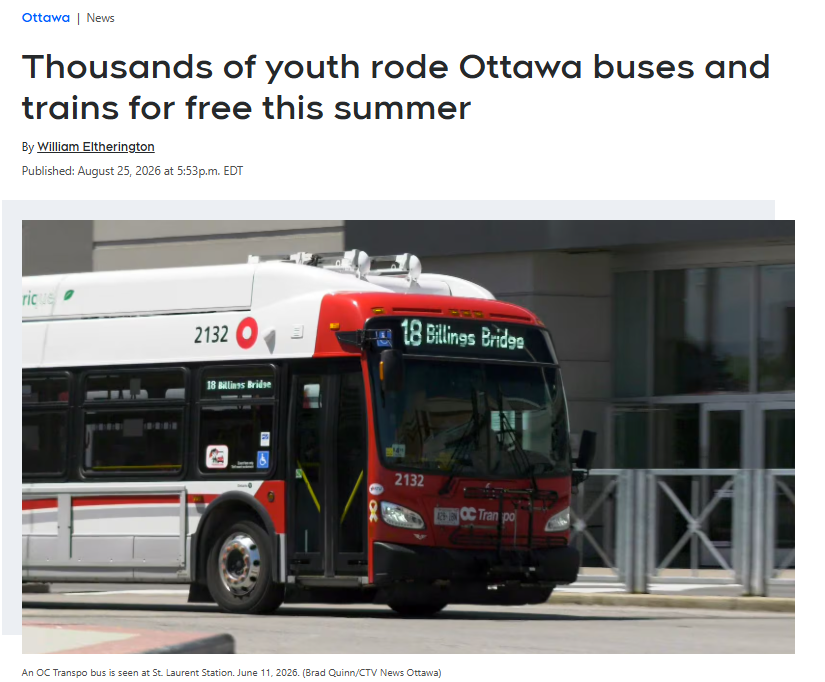
Ottawa has recently introduced free youth transit for the summer holidays, as well all year round on evenings and weekends. By doing so, they are creating opportunities for recreation, employment, and social participation during times when transportation for youth can often be a barrier.
North Bay is exploring youth transit in partnership with Planet Youth, recognizing that mobility is connected to much more than transportation. By exploring how young people access recreation, social opportunities, and community programming, the initiative seeks to better understand the relationship between mobility, belonging, and youth mental health.
Each of these communities is taking a different approach, responding to local circumstances and contributing valuable lessons that other municipalities can learn from.
Change Takes Time – And That's Okay
It’s important to remember that successful youth transit initiatives don’t happen overnight.
Kingston's High School Transit Pass began as a pilot program. It took nearly ten years of continuous learning, evaluation, and community support to become a permanent part of the transit system.
The Halifax Regional Municipality spent more than six years steadily expanding its Student Transit Pass Program, growing from a pilot into a critical piece of regional infrastructure serving approximately 30,000 students across 59 schools.
Building successful youth mobility programs is not about implementing the "perfect" solution on day one. What matters is creating thoughtful pilot projects, measuring outcomes, listening to youth and families, learning from experience, and improving programs over time.
The Evidence Is Becoming Increasingly Clear
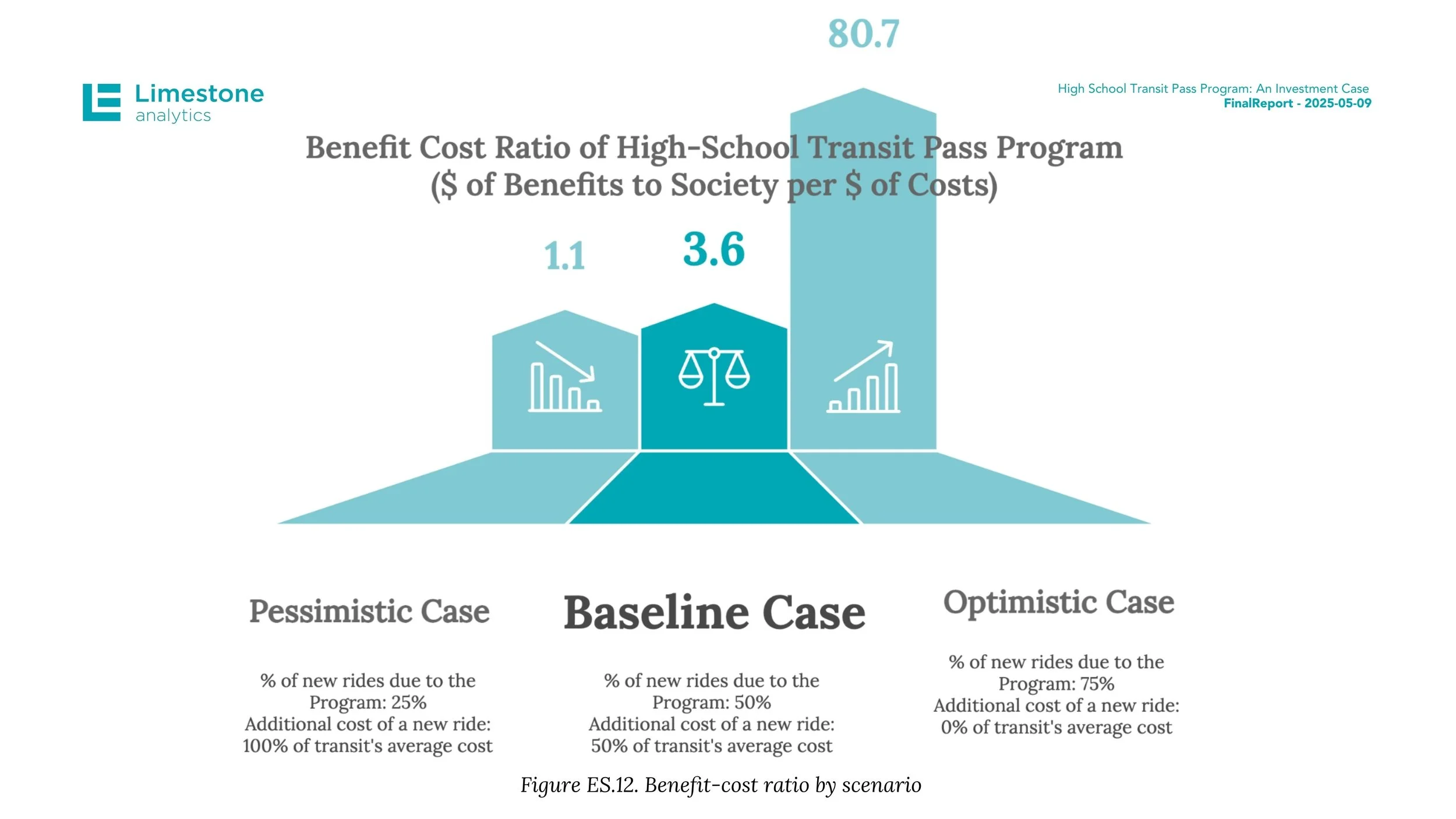
Independent research is quantifying what many have already observed. The Limestone Analytics cost-benefit analysis of Kingston's long-running High School Transit Pass Program found measurable annual benefits extending well beyond transportation itself, including:
Approximately 16,000 fewer student absences.
More than 10,000 hours of family time saved.
Roughly 72,000 fewer private vehicle trips.
Around 70 tonnes of greenhouse gas emissions avoided.
Long-term familiarity with public transit among young people who continue to take transit as they age out of the program.
These findings illustrate how investments in youth mobility produce benefits for education, families, climate goals, congestion, and the overall effectiveness of municipal transit systems.
Data from the Halifax Regional Municipality reinforces this broader perspective. More than 8,100 survey respondents reported that the Student Transit Pass Program made a positive difference in the lives of youth and families.
In winter 2025:
More than half of students identified Halifax Transit as one of their primary ways of getting to school.
More than three-quarters used transit weekly for activities beyond school, including work, sports, volunteering, shopping, and social activities.
More than 90 percent of high school students reported that the program increased their independence.
These findings demonstrate that youth transit is about far more than getting from one place to another. It’s about creating opportunity and connection.
Building Stronger Communities While Building Stronger Transit
Youth transit programs are community-building initiatives. Every time a youth independently reaches a recreation program, after-school job, volunteer opportunity, sports practice, etc. is a time that a municipal investment was accessible to its intended audience.
At the same time, introducing young people to public transit builds familiarity and confidence that can support stronger transit systems over the long term. Today's youth rider may become tomorrow's daily commuter.
Learn From Communities Already Doing The Work
One of the biggest challenges facing municipal leaders is knowing where to begin. That is exactly why we created Get on the Bus.
Our goal is not to prescribe one solution. Our goal is to help communities learn from one another and support the development of a program that works for your community.
Through our website, you'll find:
Council Reports featuring council reports, agendas, motions, and staff reports from municipalities across Canada.
Best Practices highlighting lessons learned from communities implementing youth mobility initiatives.
Movement News, curating the latest developments as municipalities continue to innovate and expand youth transit across the country.
Research and Reports, including independent evaluations and evidence that can help inform local discussions.
Rather than starting from scratch, we invite you to build on the growing knowledge and experience of communities that have already begun this journey.
A Conversation Worth Having
As municipalities in provinces and territories across Canada prepare for elections, discussions will centre on housing affordability, climate action, public safety, economic development, recreation, mental health, and the future of each community.
Youth transit intersects with every one of these conversations. The question is not whether your municipality should implement the same program as Burlington, or Kingston, or Halifax. The question is instead whether transportation enables or limits the opportunities your municipality is already providing for young people.
Whether your community begins with a seasonal pilot, evenings and weekends, transit training, youth engagement, discounted fares, or a broader youth transit initiative, the most important step is starting the conversation. The future of our communities depends on investing in young people. Helping them get where opportunity already exists is one of the most practical and impactful ways to begin.
If you're running for municipal office and would like to explore what youth mobility could look like in your community, we'd be happy to connect and welcome the opportunity to share additional examples from municipalities across Canada, research, and lessons learned that can help inform your local discussions.