
Barrie Transit Field Trip Pass
Leveraging existing service to promote youth transit use
Introduction
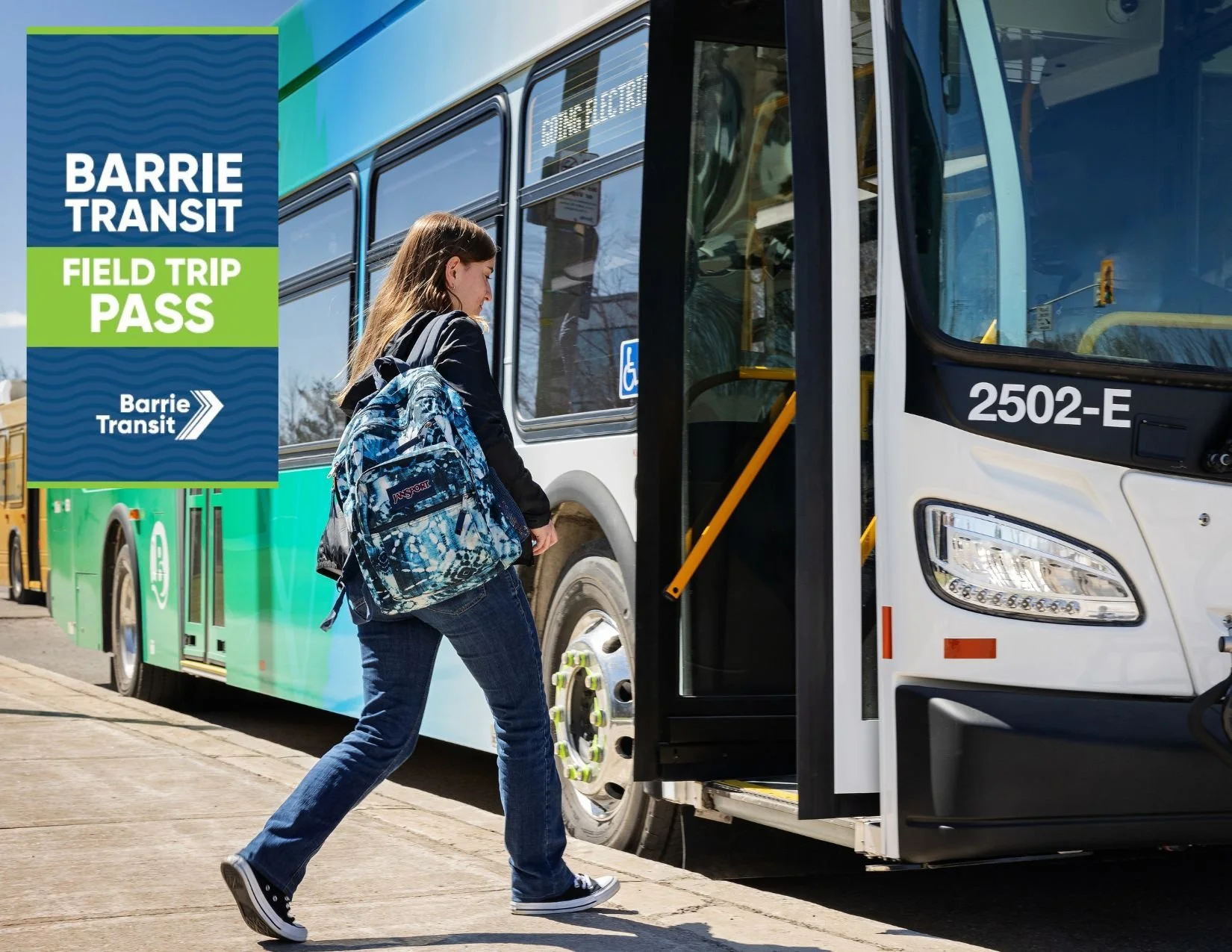
Barrie Transit’s Field Trip Pass Program demonstrates how a mid-sized city can meaningfully engage youth through transit without adding vehicles, routes, or significant new costs. By leveraging existing off-peak service routes, prioritizing support over control, and growing incrementally, the City of Barrie has created a scalable model that benefits students, educators, schools, and city programs alike.
Since its launch, the program has grown from a small elementary-school pilot to a near system-wide offering — supporting more than 1,100 student trips annually and reaching almost every eligible school in the city.
How It Started
Like many mid-sized Canadian cities, Barrie identified a clear gap in its ridership demographics: youth were significantly under-represented on the transit system.
While children under 12 could already ride for free, Barrie Transit recognized that policy alone was not enough to get kids on the bus. Most students, and many teachers, simply weren’t exposed to local transit.
At the same time:
Photo and graphics supplied by: Barrie Transit
Charter buses were becoming increasingly expensive or unavailable for schools for field trips and extra-curricular or sports activities
Transit capacity between 9 a.m. and 3 p.m. was underutilized
City departments were running youth programs that struggled with transportation access
The question became:
How do we introduce young people to transit in a way that is realistic, affordable, and scalable without overloading the system?
“We’re complementing what already exists in transit—and making it easier for youth to access it.”
How It Works
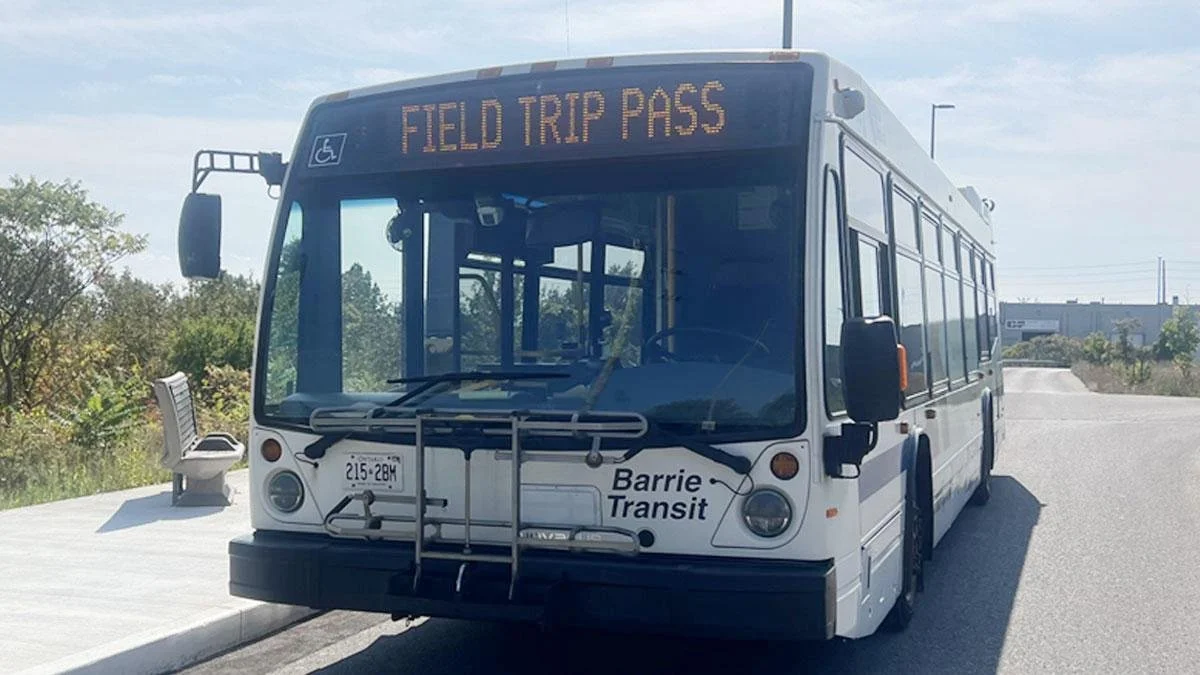
Launched in 2017, the Field Trip Pass Program is simple. Participating schools in Barrie receive three passes per year, each valid for up to 30 students and five adults, usable on regular in-service buses during the school day. No special vehicles are added, and no routes are altered.
Over the years, Barrie moved away from requiring schools to pre-book trips. Teachers can reach out for planning support, but they are not required to notify transit of trips in advance — removing a major barrier to participation.
How It’s Going
The program started with 10 elementary schools, selected based on route alignment and capacity. It grew organically through word of mouth and administrative support, reaching about 20 schools pre-pandemic.
Barrie used the pause during the pandemic years to refine the program. By the 2024–25 school year, nearly 40 schools (out of ~45 eligible) were participating, and all four local school boards were involved.
“We realized that mandatory pre-booking created more work and took up too much time. Once we removed that barrier, the program became much easier for schools to use.”
Why the Model Works
1. Capacity-Aware by Design - Barrie clearly communicates that the program uses existing service and that capacity limits apply. Group size guidelines, off-peak timing, and proactive communication around known busy days help safeguard the rider experience.
2. Support Over Control - Rather than tightly controlling usage, Barrie focuses on clear expectations and human support. Teachers can:
Plan independently using the trip planner
Request short walkthroughs from City staff
Invite Transit staff to speak at school meetings
This approach builds confidence among teachers, many of whom are infrequent transit users themselves.
3. Leveraging City Partnerships - The Field Trip Pass has become a connector for other city initiatives, including:
Fire safety education programs
Library visits
Recreational programs
Transportation access expanded program reach without increasing program budgets; it’s a win-win for everyone!
What’s The Impact?
Barrie is creating a cultural shift that normalizes transit. The City is seeing meaningful long-term benefits for their transit system and community:
Students arriving in high school already familiar with transit
Teachers gaining firsthand transit experience
Increased youth independence and confidence
Stronger cross-departmental collaboration within the city
“When students say, ‘I took the city bus in elementary school,’ that’s a win. That didn’t exist before.”
The program in Barrie demonstrates that engaging youth on transit doesn’t always require new funding or infrastructure.
Some key takeaways include:
Start small and scale only when ready
Design around existing capacity
Remove unnecessary rules and approvals
Identify champions within school boards
Treat communication as core infrastructure
For more information about the City of Barrie’s program, visit the Transit Field Trip Pass Program page.
This mini-case study was developed from an interview with Taylor Green, Barrie Transit.
