
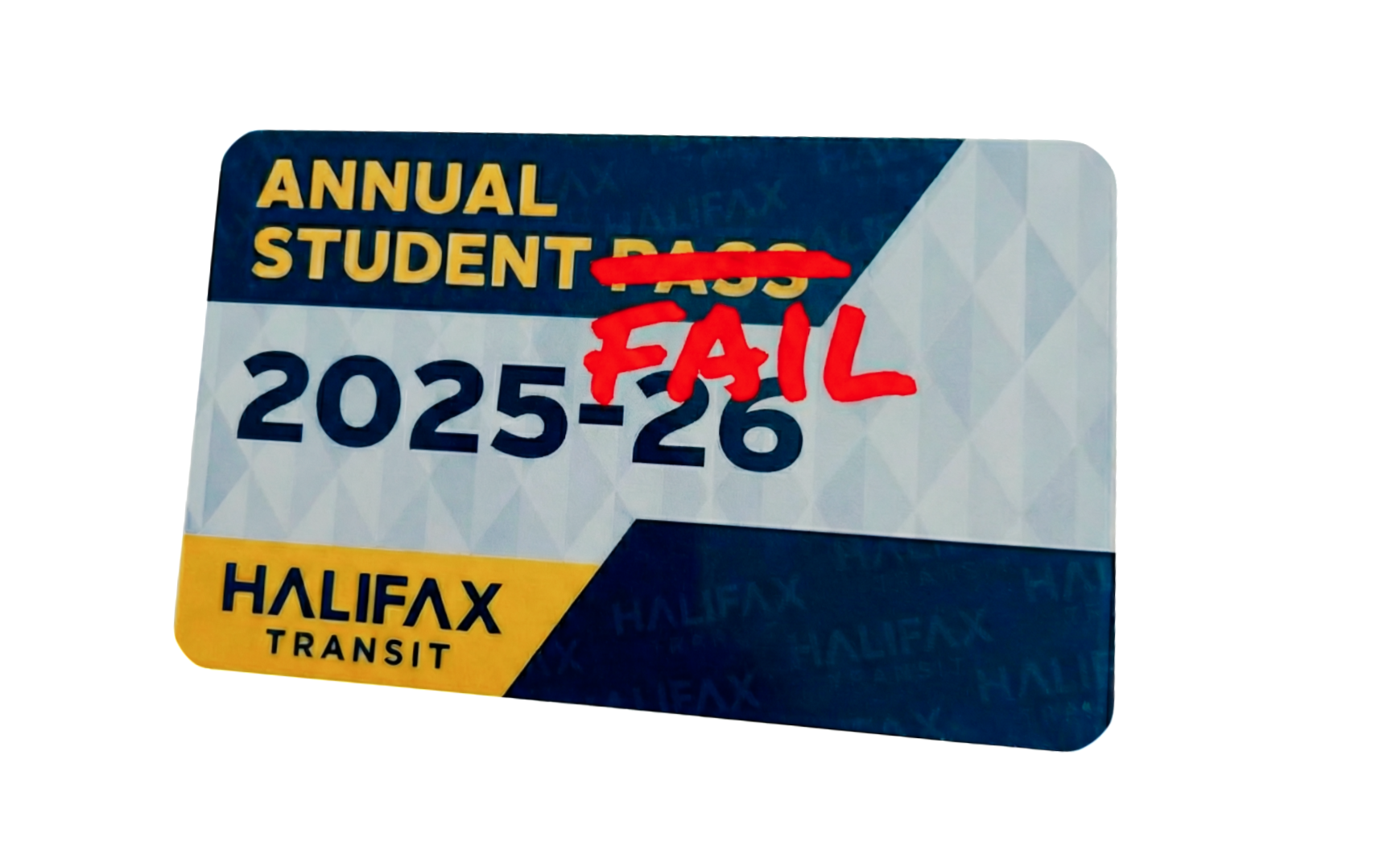
Pass or Fail?
In late February, the Nova Scotia provincial government announced an abrupt end to their portion of the funding for the Halifax Student Transit pass program. This cut will leave thousands of youth and families stranded.
Don’t let the province fail HRM's youth. Tell them to keep funding the free pass program.
Since 2024, this life-changing free transit program has given 30,000 Halifax Regional Municipality (HRM) youth greater independence through access to employment, volunteering, sports, community connection, activities and so much more. Nearly 76% of eligible youth report using Halifax Transit at least once a week for travel outside of school commutes and 91.5% of high school students believe their independence has been reinforced with the pass. It has made transportation and life in the HRM more equitable than ever. Families already stretched thin have saved time, money and stress from less driving. And the city has benefited from lower emissions and less congestion.
Tell Your MLA: This program passes with flying colours!
The Halifax Transit Pass is essential to the HRM. It supports youth independence, social equity, affordable living, climate action and so much more. Use our tool to send a letter to your MLA andPremier Houston.
Give Your MLA the Facts
The numbers show the Student Transit Pass is a smart infrastructure investment. Enter your postal code to locate your MLA and send them a professional, data-backed briefing.
Opens your email client with a pre-filled message to your MLA.
Write Directly to the Premier
The Premier's office makes the final call on the budget. Enter your details below and send a direct, data-backed message showing that cutting the Student Transit Pass is bad math — and bad policy.
Opens your email client with a pre-filled message to premier@novascotia.ca
Halifax’s Student Transit Pass:
The Facts
30,000 youth in 59 schools across the HRM are currently eligible for a free Halifax Transit pass. But the new provincial budget has withdrawn their portion of the funding, leaving the municipality scrambling to make up the difference. Since 2021, the student transit pass has transitioned from a small-scale pilot to a critical piece of regional infrastructure. It has connected youth to education, jobs, and community services – providing equitable access across the Halifax Regional Municipality.
Provincial funding cuts now disrupt:
Family budgets
Community engagement
Access to school, extracurriculars, jobs and volunteering
Normalization of public transit – a greener alternative to personal vehicle travel
Youth independence and agency
More than 8,100 survey respondents have made it clear: the pass makes a positive difference in the lives of youth and their families. In winter 2025, 52.4% of students reported using Halifax Transit as one of their primary means of getting to school. And 75.8% reported using Halifax Transit at least once a week for non-school related travel such as sports, work, volunteering or social activities.
And it’s not just about access. Youth and parents alike noted the pass has increased youth autonomy. In fact, 91.5% of high school students indicated the pass has contributed towards increasing their sense of independence.
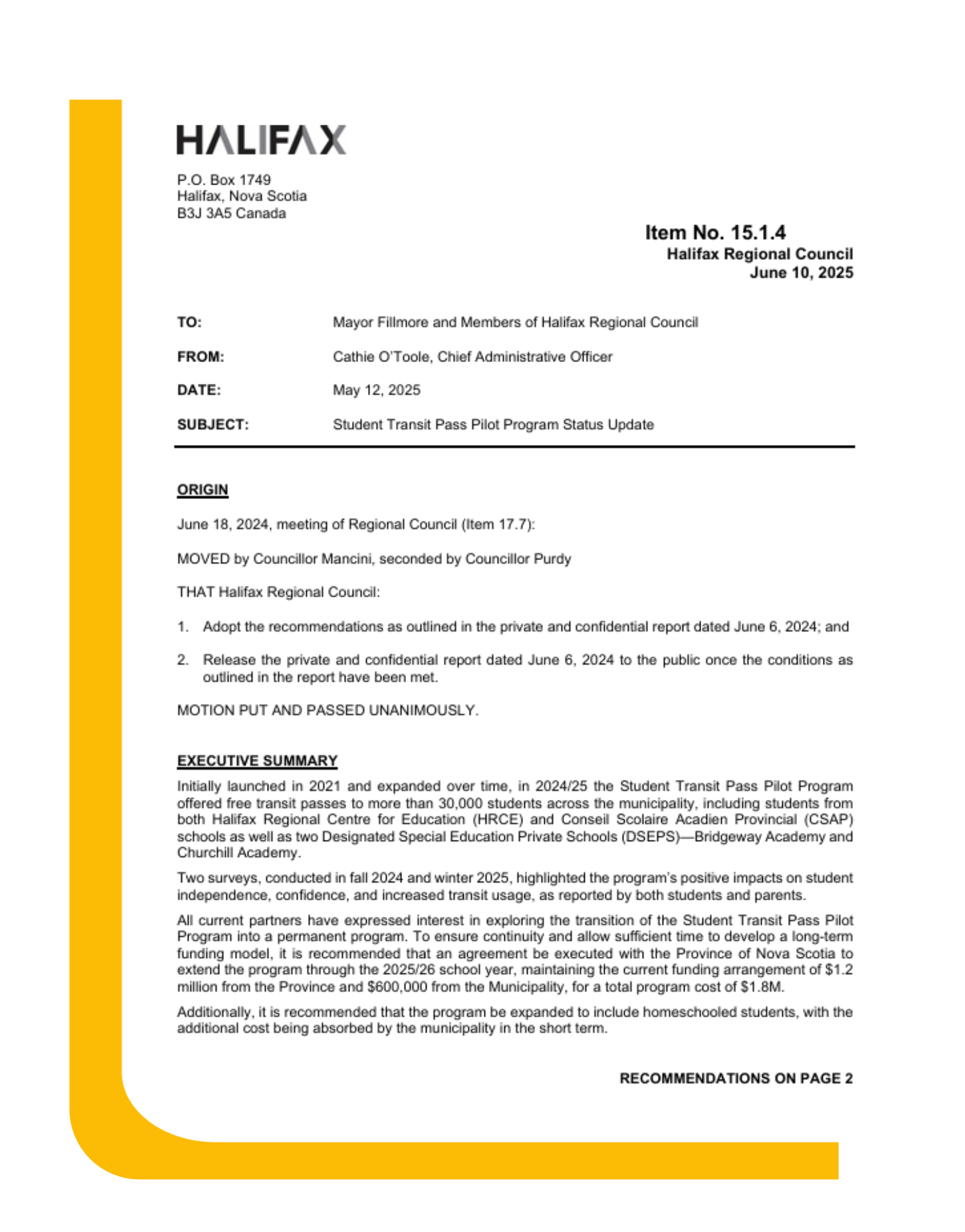
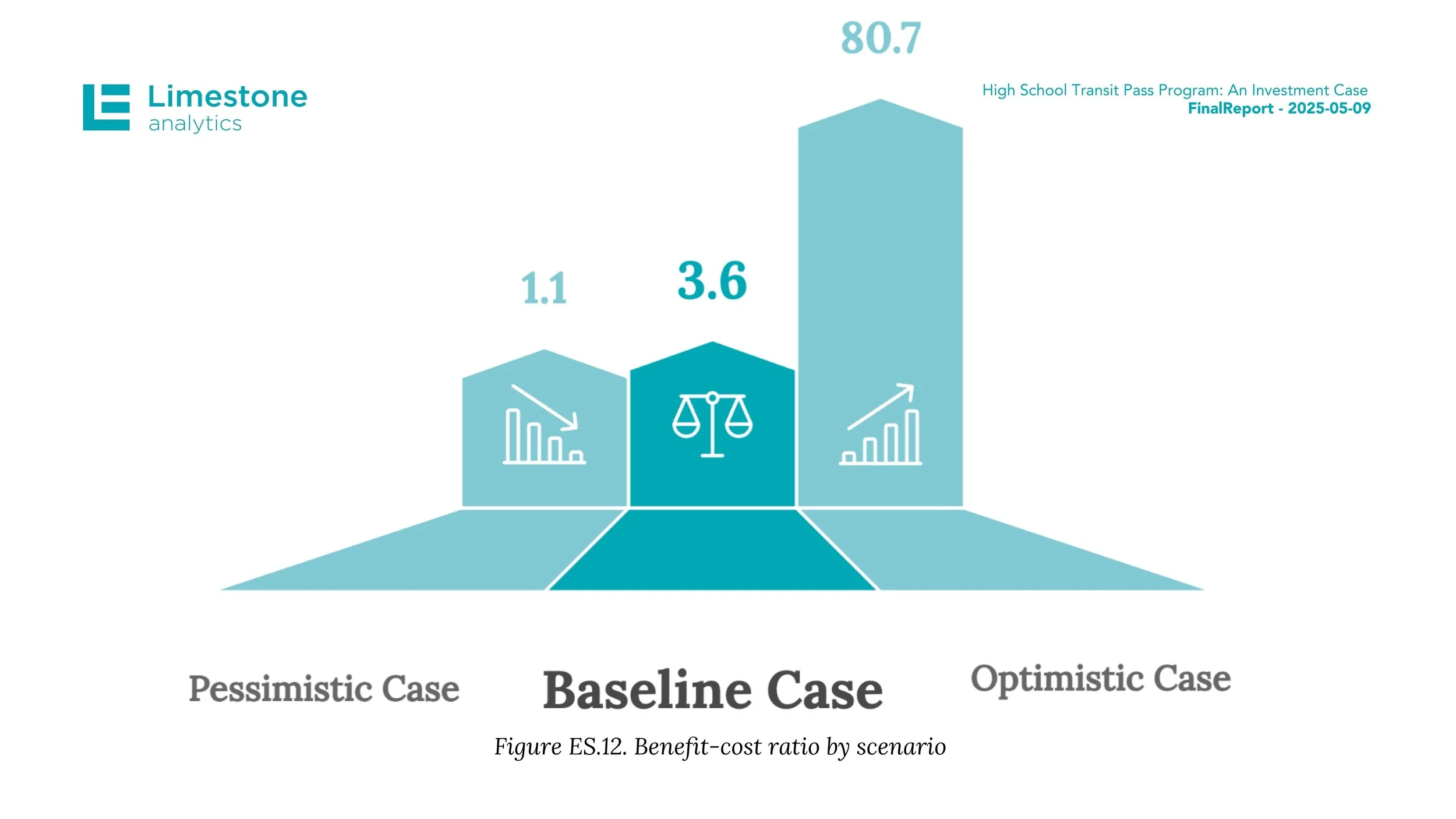
Why Transit is an Investment, Not a Cost
Credit: Ontario Association of School Business Officials (OASBO)
Independent analysis of a similar and long-running youth transit pass program in Kingston, Ontario has revealed that free passes for youth are a win for everyone.
10,000 Hours of “Family Time” Saved: Free youth passes reduce the burden on parents acting as “unpaid taxi drivers,” returning thousands of hours of productivity and rest to households annually.
16,000 Fewer Student Absences: This notable annual reduction proves that reliable, free transit helps youth, particularly those in low-income or transit-dependent households, avoid chronic lateness and missed days.
70-Tonnes in CO2 Reduction: By replacing 72,000 private car trips annually, the program serves as a tangible, no-cost tool for meeting regional climate goals and improving air quality and congestion levels in the city.
Media coverage of the Halifax Student Transit Pass and what's at stake.
Halifax Campaign
HRM MLA Social Directory
Find and tag your MLA on social media to support the Student Transit Pass Program.
No results.